Accelerators & Account Safety
This guide explains how to use Accelerator accounts safely. The goal is simple: reduce pressure on main accounts and keep automation stable without triggering unnecessary risk signals.
What an Accelerator is
An Accelerator (sometimes called a slave account) is an additional account used to execute specific background requests instead of your main account.
- Main account: your primary account for posting and normal business actions
- Accelerator account: helper account for selected automation-heavy requests
Why this helps account safety
- Distributes request load so one account does not perform everything
- Makes request patterns more consistent when configured conservatively
- Reduces the chance of spikes that often lead to challenge/checkpoint events
Safe rollout checklist (recommended)
- Start with at least 3 accelerators per main account; larger pools can improve stability when limits and delays are configured correctly.
- Use conservative delays and low daily limits for the first 2-3 days.
- Run one stable task first and review logs before scaling.
- Increase limits gradually, step by step, only after stable behavior.
- Keep fallback plan ready: pause task if all accelerators disconnect.
Where to configure
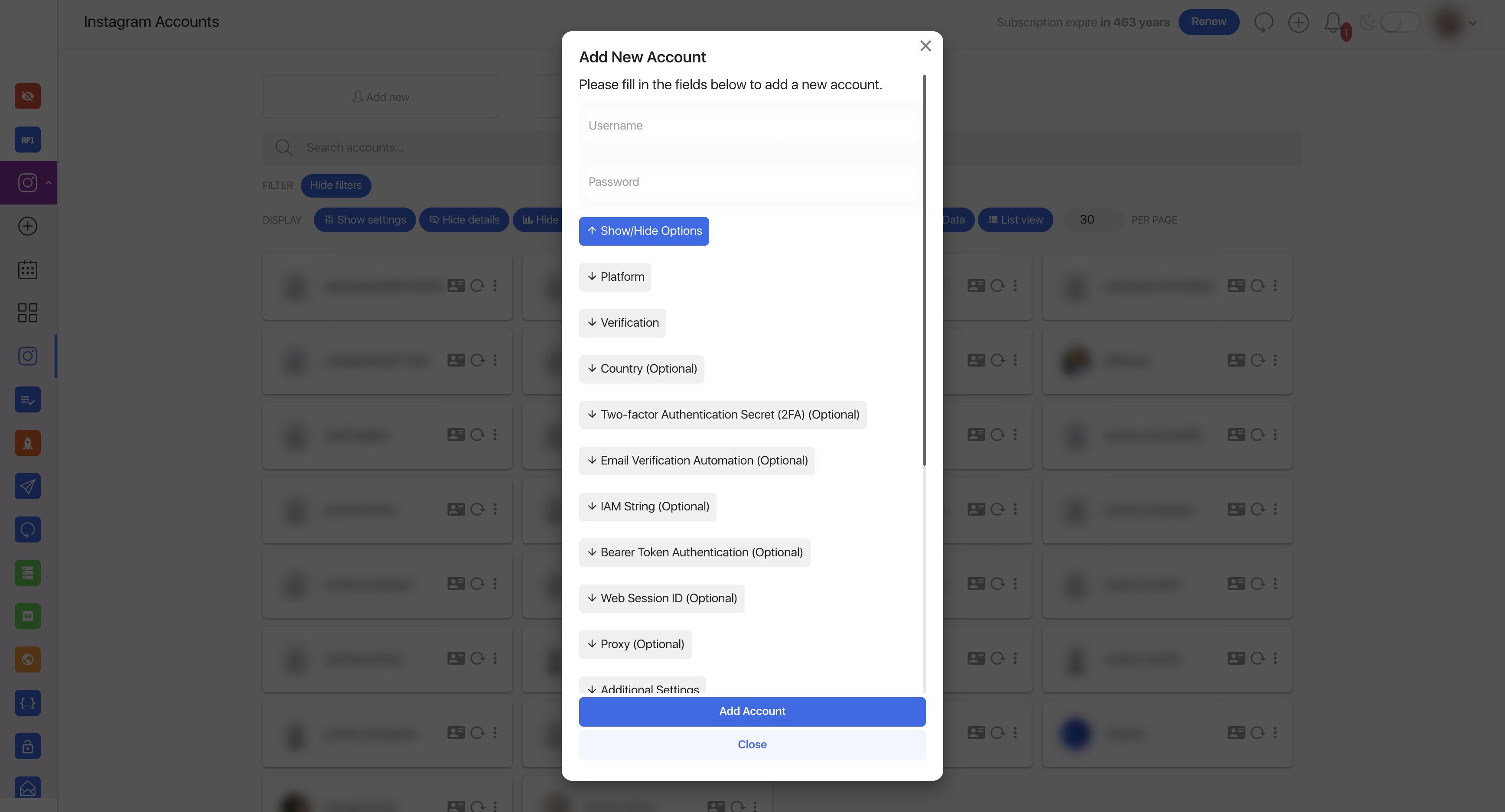
- Instagram Accounts: mark account as Accelerator and manage account state
- Leads Finder: connect accelerators and control per-function limits
- Reactions Pro: use accelerator-related controls in task settings
- Challenge Pro: handle reconnect/challenge flows when needed
Module access note
Accelerator controls depend on package modules. If this block is visible but controls are missing in your account, check package permissions with your admin.
Unavailable
Your current package may not include Accelerator controls for all modules.
Daily limits and pacing rules
- Prefer predictable pace over maximum speed.
- Set strict per-accelerator daily limits before enabling broader targeting.
- Use meaningful delays between requests, especially after reconnect or challenge recovery.
- Avoid aggressive multi-use patterns on fresh or recently recovered accounts.
Warning signs to watch
- Frequent reconnect prompts
- Repeated challenge/checkpoint events
- Sudden drop in successful requests while errors increase
- Unusual spikes in activity after recent settings changes
If risk signals appear
- Pause the task immediately.
- Reduce limits and increase delays before restarting.
- Reconnect affected accounts and complete challenge steps if required.
- Resume with smaller target scope and monitor logs closely.
Operational best practices
- Review usage and errors daily during the first rollout week.
- Keep network and proxy setup consistent; avoid frequent infrastructure changes.
- When testing new settings, change one variable at a time.
- Document your stable baseline settings so you can quickly recover after incidents.